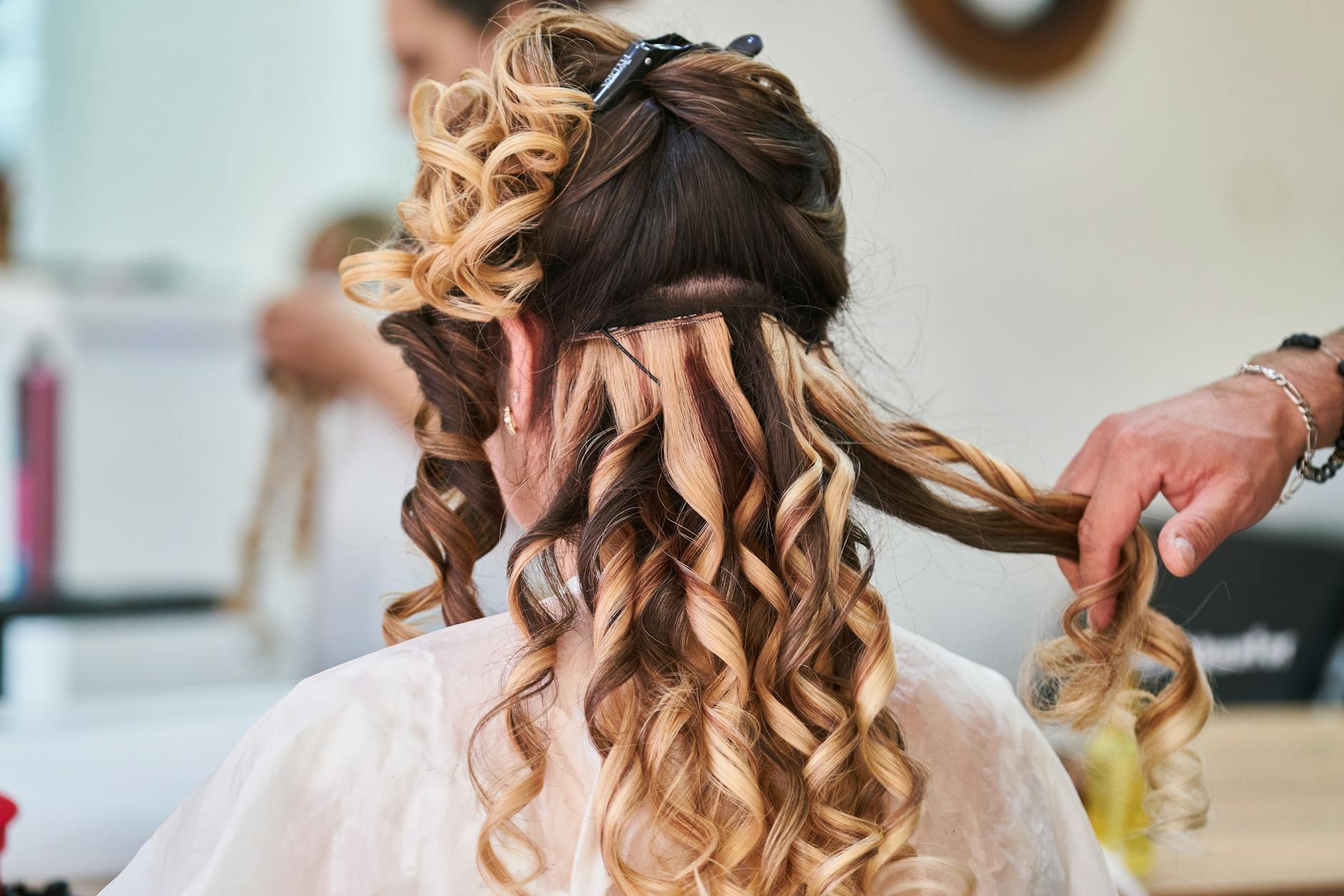
Hair Thinning Clients and Extensions: What Every Stylist Must Assess First
A client with thinning hair in your chair asking about extensions is not an automatic no. It is an assessment problem — and how you structure that assessment determines whether this becomes your most grateful client or your most complicated situation. The stylist who skips the evaluation step and installs anyway, the one who reflexively turns these clients away, and the one who sends everyone with a thinning question to a trichologist before they've even looked at the scalp are all making the same mistake: they're reacting to a category instead of examining a specific scalp.
The Three Questions That Drive the Assessment
Before you decide anything about method, weight, or row count, you need answers to three questions. First: is the thinning stable or active? Second: what is the actual density across the installation zone? Third: what is the client's maintenance compliance profile?
Active thinning — telogen effluvium, postpartum shedding, ongoing hormonal shift — is a contraindication for any semi-permanent extension method, full stop. Adding weight and mechanical tension to hair that is actively shedding accelerates the loss and creates a situation where the client associates the extensions with damage that was already in progress. The honest conversation here protects both the client and your reputation. Stable thinning — androgenetic alopecia with a consistent pattern over 12+ months, or post-effluvium recovery in the regrowth phase — is a different situation. Stable means there's something to work with. You're not intervening in an active inflammatory process.
Density across the installation zone is the mechanical constraint. The question is not "does this client have thin hair?" but rather "can the hair in this specific zone support the weight of the rows I'm considering?" Run a strand assessment: gather a section at the nape (your first row anchor), fold it over your finger, and assess volume. Extensions require enough density that the bead or bond has a meaningful number of strands providing load-bearing capacity. A single strand anchoring a bead is a problem that will pull out within weeks. Fifteen to twenty strands per attachment is a reasonable minimum, but this is assessor-dependent and should be evaluated fresh on each client rather than by a number alone.
Thinning Patterns That Are Actually Compatible with Extensions
Diffuse thinning with preserved density at the nape and lower mid-scalp is often compatible with a conservative weft installation precisely because the lower zone where rows sit has retained structure. The crown and hairline — the most cosmetically visible thinning zones — are also the highest-tension risk zones, so they should be approached conservatively or avoided in a first installation. A client whose thinning is primarily at the crown and temples can often benefit from mid-scalp weft rows that add weight and volume in the area most visible when hair is down, without creating tension at the compromised zones.
Pattern-stable androgenetic alopecia in female clients (FPHL) often presents with diffuse crown thinning and preserved perimeter density. This distribution makes conservative weft installation genuinely viable because the attachment zones have structural integrity. The client's cosmetically significant problem — crown volume loss — is addressable without placing attachments in the compromise zone. This is a case where a well-structured consultation does real work for the client rather than just turning them away with a "not right for you" that doesn't help them.
What to Avoid — And Why It Matters More Than Method Choice
The single most common installation error with thinning-hair clients is not method choice — it's row placement. Stylists who start their first row too high on the scalp are placing attachments in the area most likely to be experiencing active stress, regardless of whether the client's thinning is confined to the crown. Standard practice for any client with density concerns is to start the first row lower than you think necessary, assess the density before deciding whether to add a second row, and skip the third row entirely on a first installation.
Overloading the weft is the second most common error. A client with reduced density cannot support the same weft weight as a full-density client. Thinner, lighter wefts at wider spacing are always the right answer here — you are managing a system with limited load capacity, not just trying to add volume as quickly as possible. One correctly supported row that stays comfortable for 6-8 weeks is a better outcome than two rows that create tension within three weeks.
When the Trichologist Referral Is Actually the Right Call
If a client presents with scalp inflammation — visible redness, tenderness on palpation, visible follicular plugging or pustules — refer before installing, regardless of what they want. Installing into an inflamed scalp creates a scenario where you cannot distinguish extension-related tension from ongoing inflammatory damage, which makes it impossible to assess whether any subsequent shedding is caused by the extensions or the underlying condition. You will almost certainly be blamed either way.
Clients who have had previous extension-related damage — visible thinning at hairline temples, scarring at attachment zones from previous stylists — need a trichologist consultation before you proceed. "I had extensions before and they damaged me" is not a story that ends well with "but this stylist was different" as the only defense. Document what you see at consultation, refer to a trichologist, and proceed only with written clearance if the damage is significant enough to create liability questions.
For clients with mild, stable thinning and no prior damage history, a trichologist referral is often unnecessary and can read as deflection rather than care. Most general practitioners and dermatologists who specialize in hair loss are not extension experts and may give blanket "no extensions" advice that doesn't account for a conservative, weight-appropriate installation. Your assessment is legitimately the more relevant expertise for the installation question specifically — what you're assessing is whether the hair can physically support what you're proposing, not whether the client has a hair loss condition.
Booking and Documentation Best Practices
For thinning-hair extension clients, document your intake assessment before every installation. Note the density reading, the row count and placement decision, the weight of weft used, and the maintenance interval you've prescribed. This creates a traceable record that protects you if the client claims damage and gives you a baseline to assess at each follow-up appointment whether the installation is maintaining or causing additional stress.
If you use booking software that includes client notes, Hair Pro Appointments has extension-specific intake fields that allow you to track density assessments, formula history, and extension inventory per client in one place — useful for building a documentation standard across your thinning-hair clients without managing separate paper notes. For any case where you've made a conservative decision to proceed despite borderline candidacy, those notes matter.
Frequently Asked Questions
Can thinning hair support hair extensions at all?
It depends entirely on whether the thinning is stable or active, and whether the density in the installation zone is sufficient to support the weight and mechanical attachment of the method being used. Stable thinning with preserved nape and lower mid-scalp density is often compatible with a conservative, low-weight installation. Active thinning is a contraindication for any semi-permanent method until the shedding event stabilizes.
What extension method is safest for thinning hair?
No method is inherently safe for thinning hair — the safety comes from appropriate candidacy assessment, conservative row placement, reduced weft weight, and strict maintenance compliance. Among methods, bead-based wefts and clip-ins carry the lowest traction and chemical risk profiles for thinning hair. Keratin bonds and tape-ins require more careful selection because removal involves mechanical or chemical contact with the strand. For clients with very thin or fragile hair, halo wefts or high-quality clip-ins remain the most conservative first option.
How do you assess if a thinning-hair client is a good candidate?
A basic candidacy check involves: confirming whether thinning is stable or active (ask how long the pattern has been consistent), palpating the scalp for inflammation or sensitivity, assessing strand density at the nape and mid-scalp by gathering and folding a section, checking scalp visibility at natural partings, and reviewing any prior extension damage. If a client has had prior damage at the hairline or shows signs of traction alopecia from previous services, the bar for proceeding is higher.
Should I always refer thinning-hair clients to a trichologist first?
Not always — a blanket trichologist referral for every client with any hair thinning is over-conservative and can result in advice that doesn't account for the specific mechanics of what you're proposing. Refer when: there are visible signs of scalp inflammation, prior extension damage is present and significant, the client has an active medically-diagnosed hair loss condition, or the shedding appears active rather than stable. For clients with mild, stable, pattern-consistent thinning and no prior damage history, your own density assessment is the relevant expertise for the installation decision.